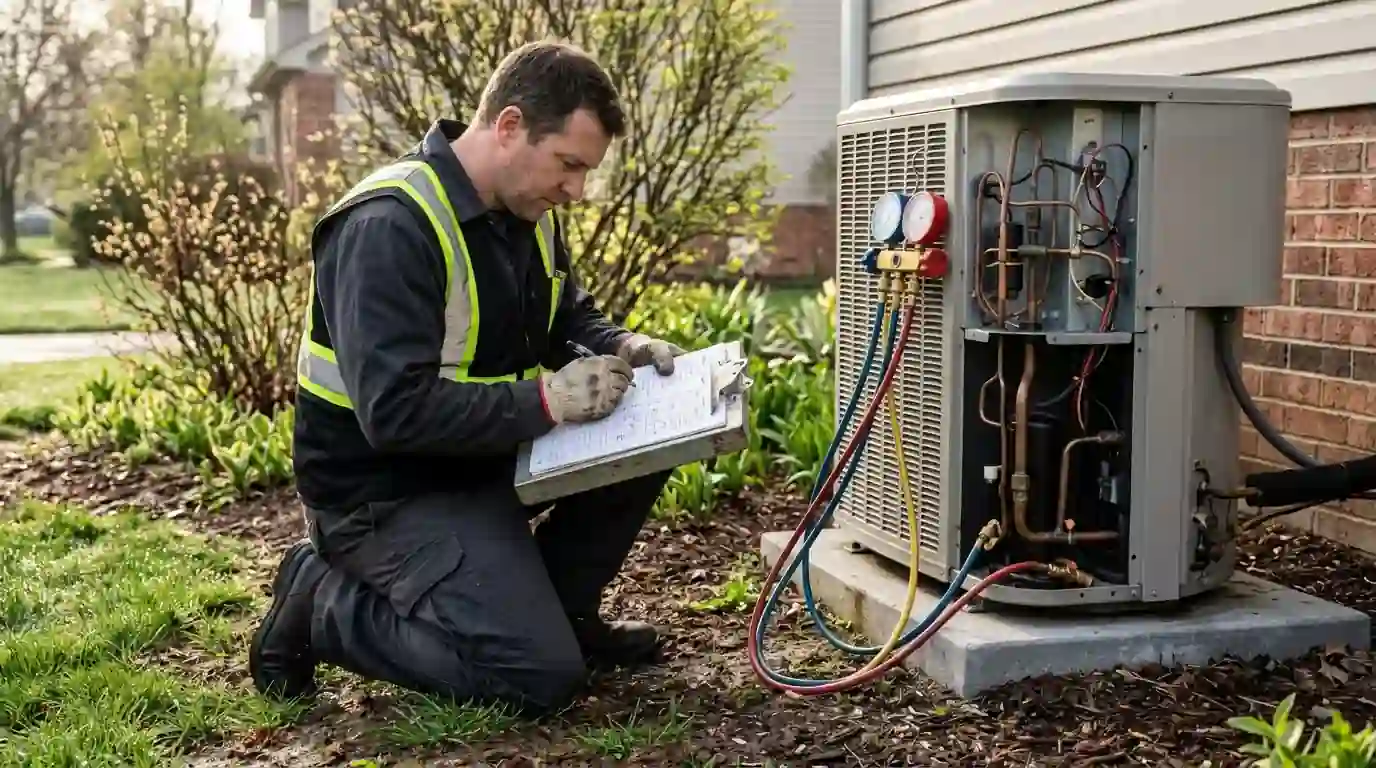
Tune-ups range from a careful hour of testing to a ten minute filter swap and an upsell. Here is what a complete visit looks like for each kind of system, so you know what you are paying for.
Cooling and heat pump tune-up
A good cooling visit covers the outdoor coil, electrical parts, motors, refrigerant temperatures and the indoor side:
- Outdoor coil cleaned from the inside out
- Capacitor measured in microfarads, contactor checked
- Fan and blower motor amps recorded
- Superheat or subcooling calculated
- Drain line flushed and float switch tested
- Temperature split measured at supply and return
Furnace tune-up
A heating visit should include burner and flame sensor cleaning, a look at the heat exchanger, a test of every safety switch, gas pressure and temperature rise, plus a carbon monoxide check at the flue and in the house.
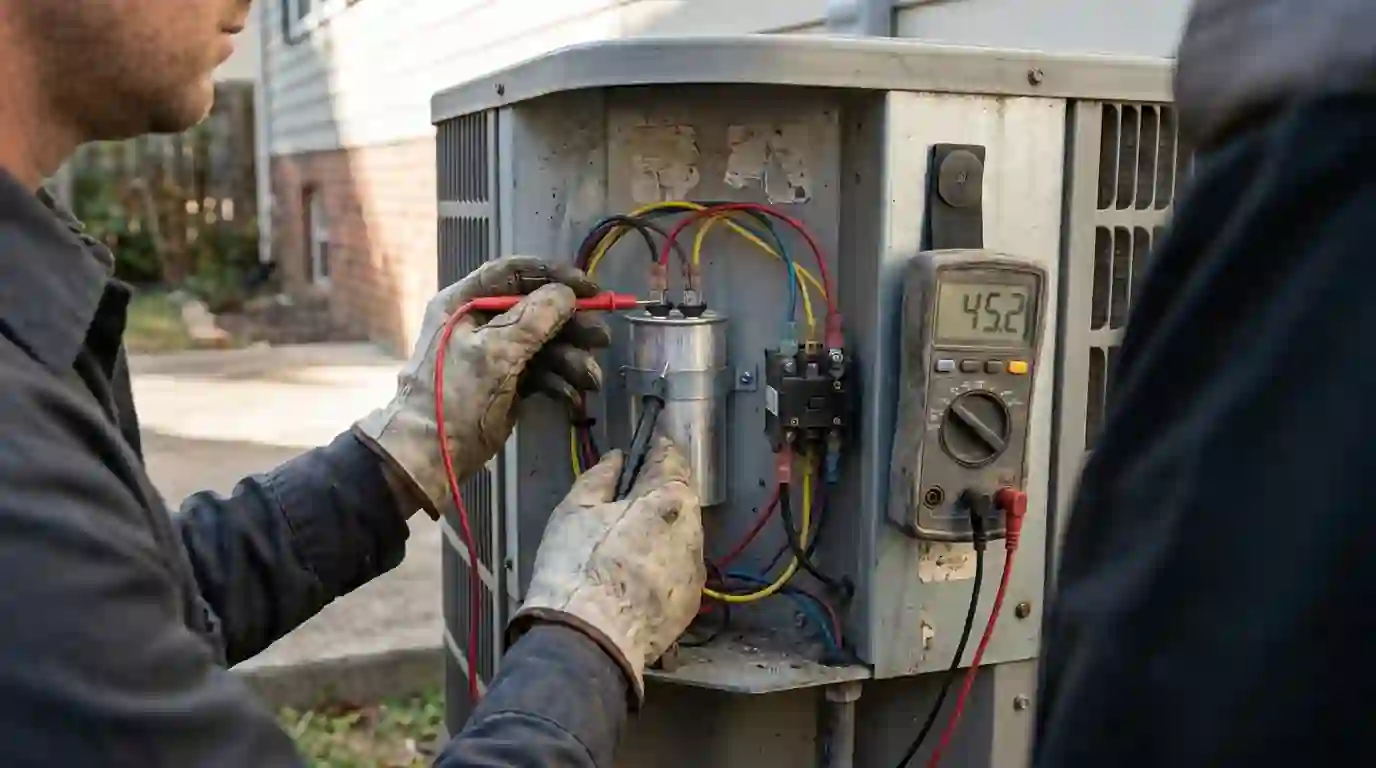
Heat pump extras in the fall
Heat pumps need the reversing valve, defrost cycle and backup heat strips tested before winter. That part is often skipped in a quick visit and it is where many January failures start.
You should get readings, not just a sticker
Ask for the numbers: capacitor values, amps, temperature split, refrigerant readings. They give you a baseline for next year and show the work was done.
Signs of a rushed visit
The technician never opened the outdoor unit, no gauges or thermometers came out, there is no written readout, or the visit ended with a long list of urgent repairs and no measurements to back them up.
Questions about this topic
How long should a tune-up take?
About 45 to 75 minutes per system, longer for a heavily soiled coil or a heat pump with strip heat to test.
What readings should I ask for after a tune-up?
Capacitor microfarads, motor amps, temperature split and refrigerant superheat or subcooling for cooling; temperature rise, gas pressure and CO readings for heating.
About the author
Beulah Tankersley edits the Air Essentials Comfort Guide. She turns what our technicians see on Nashville service calls into plain advice homeowners can use before and after they call. More about our editor.