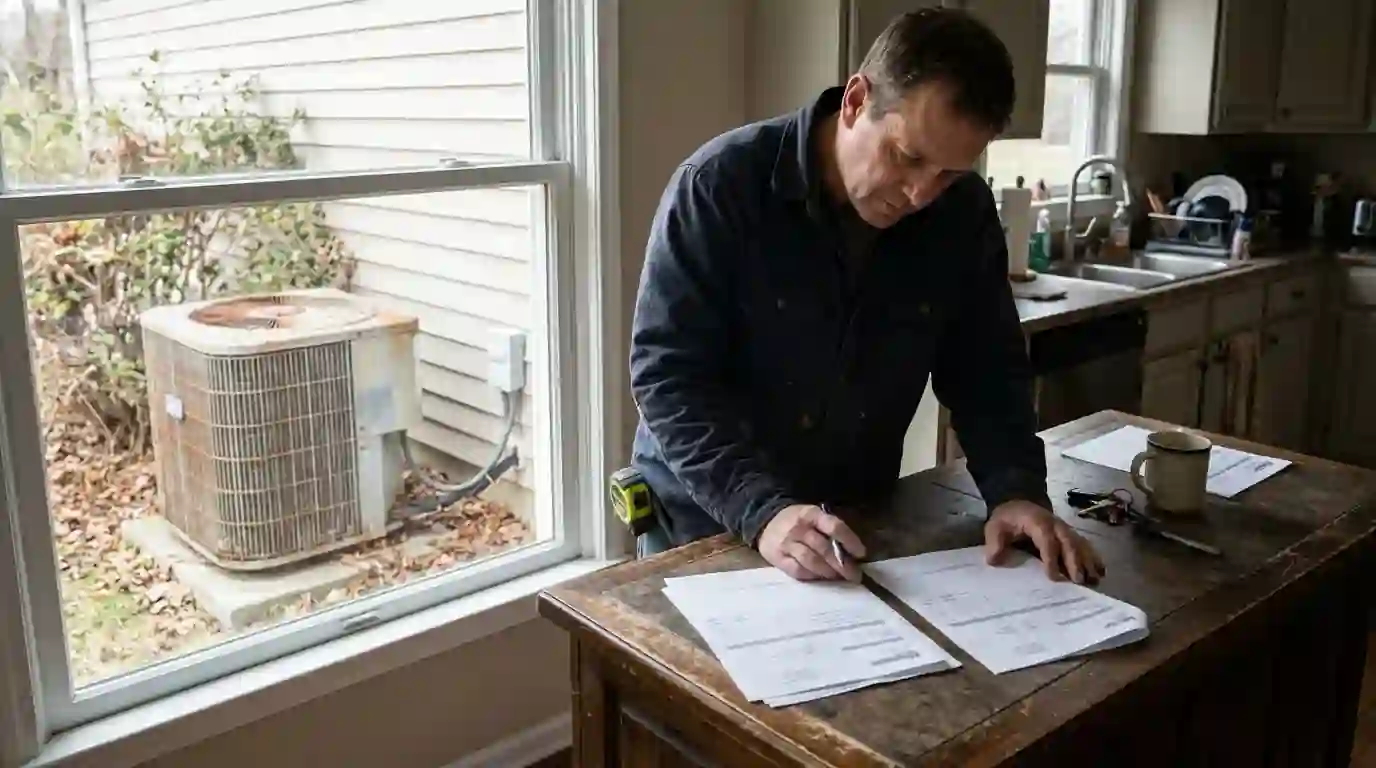
Nobody wants to buy a new system on a hot Saturday. But putting $1,800 into a 16 year old unit can be the more expensive choice. Here is a simple framework to make the call with numbers instead of pressure.
Start with age
Heat pumps and air conditioners in Middle Tennessee typically last 12 to 16 years. Gas furnaces often last 18 to 22. A system near the end of that range is more likely to have the next part fail soon after this one.
Multiply age by repair cost
A common rule of thumb: multiply the system's age by the repair cost. If the result is over about $5,000, replacement deserves a serious look. A $350 capacitor on a 12 year old unit ($4,200) is an easy repair. A $2,200 coil on a 15 year old unit ($33,000) points toward replacement.
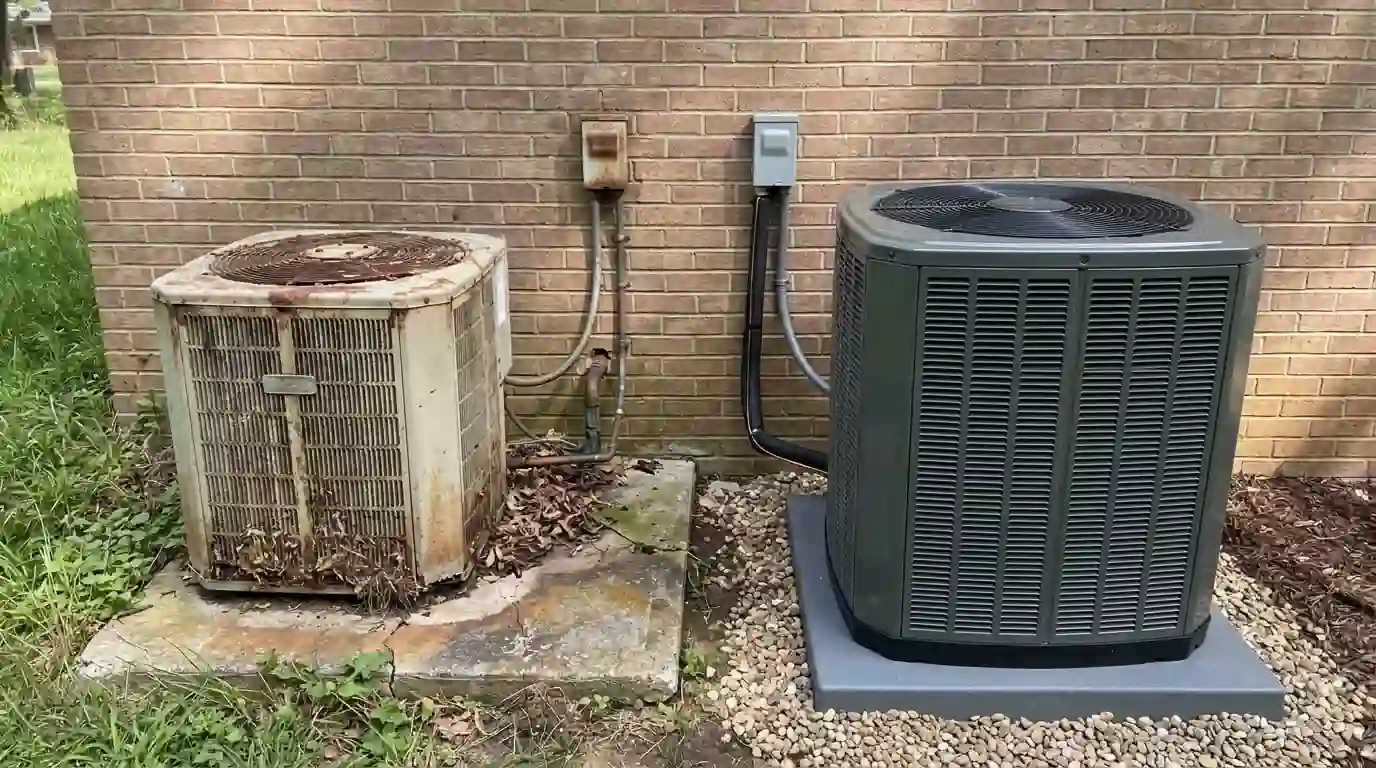
Check the refrigerant
Systems that use R-22 are expensive to repair because that refrigerant is no longer produced. Any repair that involves recharging an R-22 system should be priced against a replacement.
Count comfort, not just cost
If the house has hot rooms, high humidity or loud equipment, a replacement can fix those at the same time when it is designed properly. A repair returns the system to how it worked before, problems included.
- Hot or cold rooms that never get better
- Humidity that stays above 55 percent
- Short cycling
- Rising bills with the same settings
Ask for both prices
A good contractor will price the repair and the replacement side by side and explain which parts of the system can be reused. If you only hear one option, ask for the other.
Questions about this topic
How long does a heat pump last in Tennessee?
Usually 12 to 16 years with yearly service. Heat pumps work in both seasons here, so they log more hours than an AC alone.
Is it smart to replace the furnace and AC together?
If both are near the end of their life, yes. Matched equipment installed together usually performs better and saves a second labor bill.
About the author
Beulah Tankersley edits the Air Essentials Comfort Guide. She turns what our technicians see on Nashville service calls into plain advice homeowners can use before and after they call. More about our editor.